
Why Is Everyone Going Niche Fragrance & Why It Matters
Something has changed in the way the world smells. Walk into any gathering of fragrance-literate people today — in Kuala Lumpur, Singapore, Tokyo, Dubai, London or New York — and the conversation is no longer about the latest celebrity launch or the newest designer release. It is about Maison Margiela's Replica series, Byredo's Gypsy Water, Amouage's Interlude, Creed's Aventus, or something even more obscure that no one else at the table has heard of. The niche revolution is real, it is accelerating, and it matters far beyond the world of fragrance.
This is not a trend driven by marketing. It is a cultural shift driven by information, disillusionment and a fundamental change in what people want from the things they put on their bodies. Understanding why it is happening is understanding something important about contemporary culture — and about what comes next.
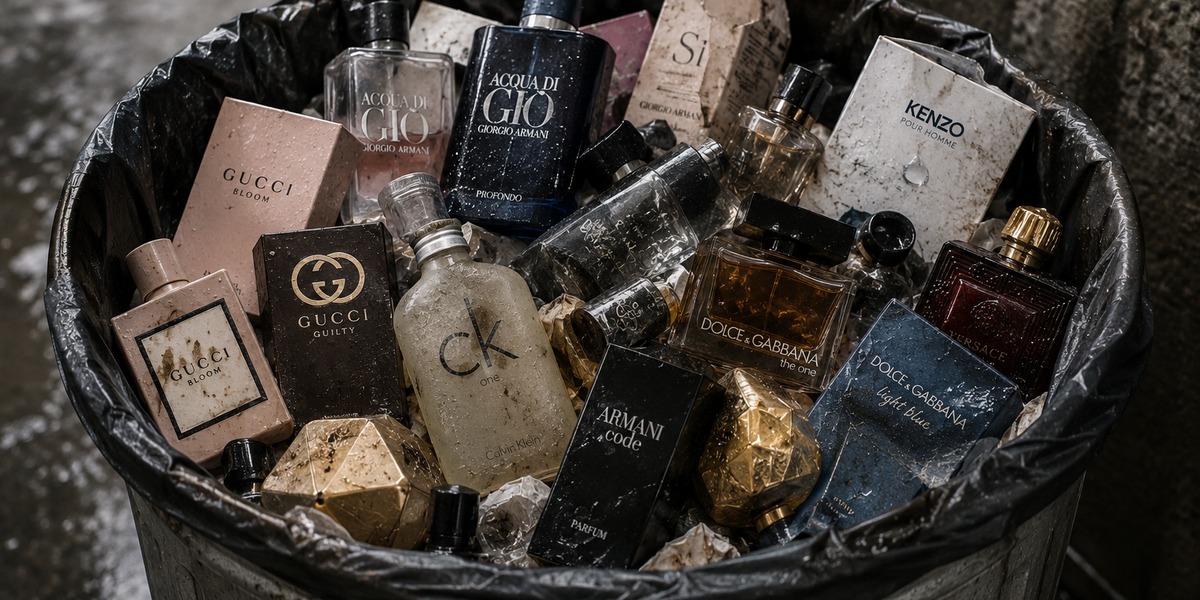
The shift from designer to niche fragrance is not a niche phenomenon — it is one of the most significant commercial movements in the global beauty industry. The data tells a story of structural change, not cyclical trend.
The niche fragrance market has grown from under $2 billion in 2015 to over $8 billion in 2025 — a fourfold increase in a decade, during a period when the overall fragrance market grew by approximately 30%. This differential growth rate reflects a structural shift in consumer preference, not a cyclical fashion. And it shows no signs of decelerating — industry analysts project the niche market will exceed $15 billion by 2030, representing the fastest-growing category in the entire beauty and personal care sector.
The shift to niche fragrance is driven by a convergence of cultural, psychological and commercial forces that have been building for two decades and reached critical mass in the 2020s. These nine reasons explain the movement comprehensively.
The major designer fragrance houses have not been passive observers of the niche migration — they have responded with a range of strategies, some effective and some deeply revealing of the structural limitations of their model.
The prestige sub-brand strategy has been the most common response. Chanel's Les Exclusifs, Dior's La Collection Privée, Guerlain's L'Art et la Matière, Giorgio Armani's Privé, Hermès' Hermessence — all represent attempts by major designer houses to capture niche-seeking consumers within their existing brand architecture. These collections are typically more expensive, more creative, less widely distributed and more ingredient-intensive than the main line. Some are genuinely excellent; others are niche-priced designer fragrances in more interesting bottles.
The acquisition strategy has been equally prevalent. LVMH acquired Maison Francis Kurkdjian, Kering acquired Creed, Estée Lauder companies own Le Labo, Editions de Parfums Frédéric Malle and Kilian Paris — major luxury conglomerates have been systematically buying the niche houses that their core consumers are migrating toward. This strategy faces an inherent tension: the independence and authenticity that made these houses appealing is potentially compromised by corporate ownership.
The celebrity niche play has emerged as a newer strategy — positioning celebrity-associated fragrances at niche price points with niche-adjacent storytelling. Rihanna's Fenty fragrances, Harry Styles' Pleasing, various K-pop artist collaborations — these attempt to combine the reach of celebrity marketing with the positioning of niche authenticity. The fragrance community's reception has been consistently sceptical.
None of these strategies fully addresses the fundamental issue: that the migration to niche is driven by a rejection of the values and practices of mass production, not merely a search for different bottles. A luxury conglomerate can buy a niche house but cannot replicate the independence, creative freedom and authentic craft values that made it niche in the first place.
Of all the geographic markets driving the global niche fragrance boom, Southeast Asia deserves particular attention — both because of the scale of the shift and because of what it reveals about the nature of the movement. In markets including Malaysia, Singapore, Thailand, Indonesia and the Philippines, a fragrance culture that barely existed a decade ago has emerged with remarkable speed and sophistication.
The Southeast Asian fragrance consumer is in many ways the ideal niche consumer: deeply informed by social media, highly attuned to quality and authenticity, culturally predisposed toward luxury goods as markers of achievement and identity, and operating in a climate where the performance characteristics of niche fragrance — longevity, projection, complexity — are immediately apparent.
Malaysia and Singapore in particular have developed fragrance communities of genuine sophistication. Fragrance boutiques in Kuala Lumpur, Penang and Singapore now carry portfolios that rival the best specialty stores in Paris or New York. Local brands and bespoke houses — including Scensora — have emerged to serve a market that is no longer satisfied with what the duty-free counter offers.
The cultural dimension of this shift is significant. In Southeast Asian cultures with strong traditions of personal presentation and social fragrance — the use of attars, bukhoor and traditional aromatic materials — the move to niche fragrance represents not a discovery of fragrance but a sophistication of an existing relationship. Consumers who grew up with the intensity and complexity of oud-based traditional fragrance find natural alignment with the depth and ingredient quality of the finest niche offerings.
The niche fragrance movement matters beyond its immediate commercial significance because it is a visible manifestation of a broader cultural shift that is reshaping multiple industries simultaneously. Understanding it provides a lens for understanding what contemporary consumers value — and what they are turning away from.
The rejection of mass identity is the deepest current running through the niche movement. The desire not to smell like everyone else is ultimately the desire not to be everyone else — to refuse the homogenisation of identity that mass production necessarily creates. This same impulse drives the rise of independent restaurants over chain dining, vinyl records over streaming playlists and local craft producers over global brands across multiple categories.
The return of craft as value runs equally deep. In an economy where most goods are produced by algorithms and assembled by machines in undisclosed locations, the knowledge that a fragrance was created by a named perfumer using verified ingredients from identified sources carries genuine meaning. Craft is not just a production method — it is a value proposition that mass production cannot replicate regardless of budget.
The community dimension of the niche movement is unprecedented in fragrance history. Previous generations of fragrance lovers were essentially isolated in their enthusiasm. Today's niche enthusiast belongs to a global community of shared knowledge, collective discovery and mutual education that makes the experience of fragrance fundamentally different from what it was twenty years ago. Community creates loyalty, and loyalty creates markets that sustain independent houses against the competitive pressure of billion-dollar advertising budgets.
For the most engaged fragrance consumers, niche is not the destination — it is a stage in a journey. The logic of niche — choosing something that fewer people wear, that reflects individual taste more precisely, that offers genuine quality and creative ambition — leads inevitably toward a single conclusion: the desire for something that no one else wears at all.
This is where bespoke fragrance enters the story. Every year, a growing proportion of serious niche consumers arrive at a realisation: that even the most exclusive niche fragrance is still someone else's creation, worn by thousands of others who share their taste. The only true escape from ubiquity is a fragrance made for you alone.
At Scensora, we see this journey clearly in our clients. The typical bespoke commission comes not from someone who has never engaged with fragrance seriously, but from someone who has worn designer fragrances, graduated to niche, developed real knowledge and arrived at the point where even the finest available options feel insufficient. They have not run out of fragrances to explore — they have run out of fragrances that feel fully, unreservedly like them.
Bespoke is the end of the niche journey and the beginning of something else entirely: a relationship with fragrance that is not about choosing from what exists, but about creating what does not yet exist. For the consumer who has arrived at this point, the niche revolution has done its work. What comes next is personal.
The niche fragrance movement is not a rebellion against quality — it is a pursuit of it. It is what happens when an informed consumer realises that the price they are paying for a designer fragrance is mostly paying for an advertising campaign, and that for the same money — or often less — they can have something made with real ingredients by a real perfumer for an audience that actually understands what they are smelling. Once that realisation lands, there is no going back. And for the consumers who follow that logic all the way to its natural conclusion, the journey ends at a single place: a fragrance made only for them.
- The niche fragrance market has grown from under $2B in 2015 to over $8B in 2025 — growing at 3× the rate of the overall fragrance market.
- The movement is driven by nine converging forces: ubiquity rejection, knowledge revolution, value revelation, identity expression, reformulation betrayal, discovery community, ingredient transparency, wellness alignment and Asian market awakening.
- Major designer houses have responded with prestige sub-brands and niche acquisitions — but cannot replicate the independence and craft authenticity that drives the migration.
- Southeast Asia is not following the niche trend — it is increasingly defining it, with consumers leapfrogging the designer phase entirely.
- The niche movement reflects a broader cultural rejection of mass identity across multiple industries simultaneously.
- For the most engaged niche consumers, bespoke is the inevitable destination — the only logical end to a journey that begins with wanting something fewer people wear and ends with wanting something no one else wears at all.