
Middle Eastern Perfumery: Oud, Attar & the Rise of Arabian Scents
Middle Eastern perfumery is one of the oldest and richest fragrance cultures in the world, and today it is one of the most influential. Searches for Arabian perfume, oud and attar have grown sharply worldwide, driven by social media, travel and a love of long lasting, opulent scents.
This guide explores the materials, rituals and styles of Middle Eastern perfumery, and how to wear them beautifully, including in tropical climates.
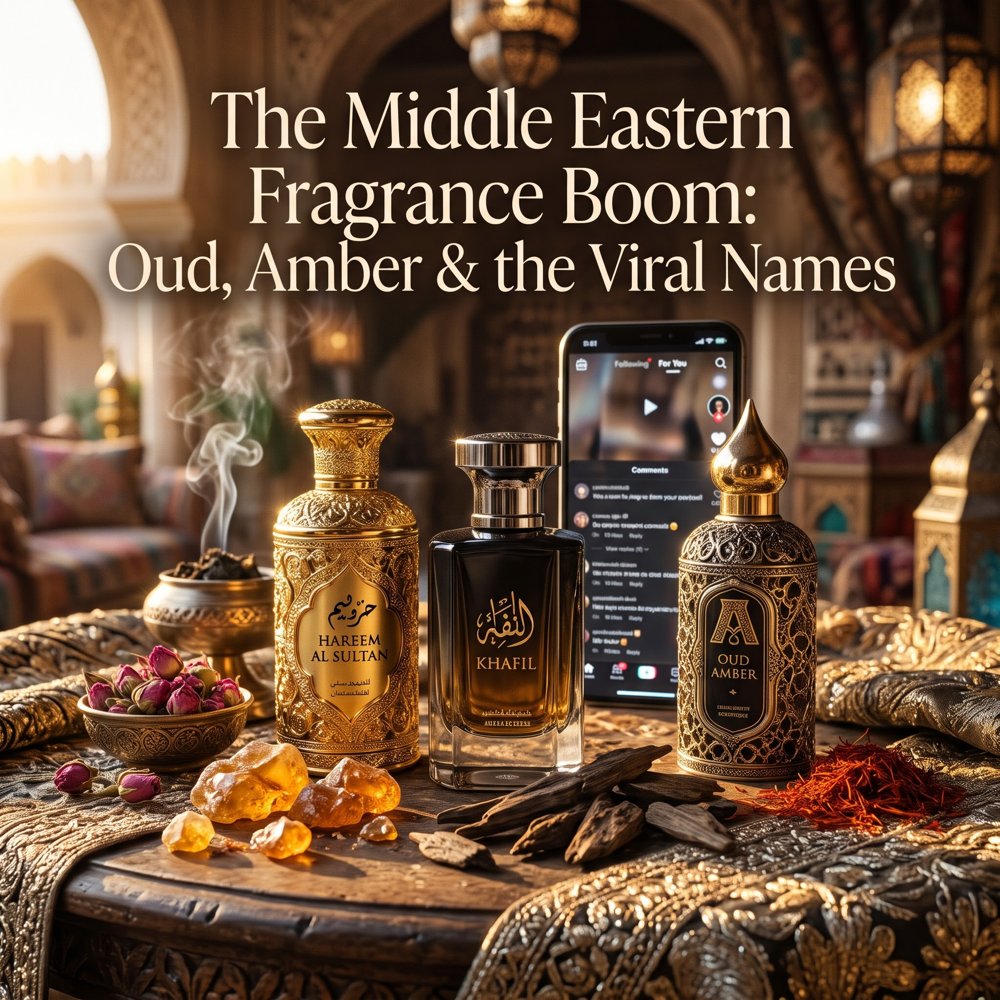
Oud, or agarwood, forms when aquilaria trees produce a fragrant resin. It is deep, woody, smoky and slightly animalic, and one of the most precious materials in perfumery.
Different origins smell distinct: compare Cambodian Oud, Malaysian Oud and Laotian Oud. Read our complete oud guide.
Attars are concentrated, alcohol free perfume oils traditionally distilled into a base of sandalwood. They are applied in small amounts to pulse points and last for many hours.
Mysore Sandalwood remains the classic attar base.
Musk | Saffron
Taif rose and saffron are signatures of Arabian perfumery. Rose oud is perhaps the most famous combination in the world, balancing floral richness with dark wood.
Try Bulgarian Rose and Saffron.
Rose Oud
Frankincense, myrrh, labdanum and amber give Middle Eastern scents their warm, glowing depth. Bakhoor, scented wood chips burned on charcoal, is used to perfume homes, clothes and hair.
Explore Frankincense and Amber.
Amber | Bakhoor
Layering is central to Arabian fragrance culture: bakhoor on clothes, attar on skin and a spray perfume on top. The result is rich, personal and very long lasting.
See our guide to fragrance layering for modern techniques.
3. Perfume
Classic Arabian perfumes are rich. For Southeast Asian heat, we often create modern interpretations: lighter oud with citrus, rose with clean musk, or saffron with tea.
A Bespoke Experience lets you capture that opulence in a form that wears beautifully in humidity.
Saffron and Tea
Middle Eastern perfumery shows the world that fragrance can be ritual, generosity and identity. Its materials are among the finest in perfumery. The future lies in honouring that richness while adapting it for new climates and new wearers.
- Middle Eastern perfumery is one of the world's oldest scent cultures.
- Oud, attar, rose, saffron and amber are its signatures.
- Layering bakhoor, attar and perfume creates lasting richness.
- Oud character varies by origin.
- Modern Arabian scents can be adapted for tropical climates.
Frequently Asked Questions
Answers to frequently asked questions about Middle Eastern and Arabian perfumery.
What makes Arabian perfume different?
Arabian perfume emphasises rich, long lasting materials such as oud, rose, saffron, amber and musk, often in oil form, and a culture of layering scents.
What is oud perfume?
Oud perfume features agarwood, a precious resinous wood with a deep, smoky, woody and slightly animalic scent. Its character varies by origin.
What is the difference between attar and perfume?
Attar is a concentrated, alcohol free perfume oil, traditionally distilled into sandalwood. Spray perfume uses alcohol and projects more.
Can I wear oud in hot weather?
Yes, choose lighter modern oud blends with citrus, tea or musk, and apply sparingly in the daytime.
Does Scensora offer oud fragrance oils?
Yes. We supply several oud oils including Cambodian, Malaysian and Laotian Oud from 100ml to 5kg, and create bespoke Arabian style perfumes.